
⏱ Time: 15 minutes
Have open: Your Starter Spreadsheet’s Profit & Loss tab and a copy of Schedule C
Schedule C is the tax form where sole owners and single-member LLCs report business profit, and every category in your books lands on one of its lines. When your categories match those lines, your CPA can turn your books into a return without rebuilding them, and you’re not paying them to sort your year.
Quick note: this is about knowing where things land. Tax decisions stay with your CPA. S corps and partnerships file different forms, but the same categories still match up.
How Schedule C is laid out
- Part I, income: Line 1 is gross receipts (your job income). Line 6 is other income.
- Part II, expenses: lines 8 through 27 are your overhead, plus some job costs.
- Part III, cost of goods sold: line 37 is cost of labor, line 38 is materials and supplies, line 39 is other costs.
- Line 31: net profit. The number everything else is built on.
The Schedule C lines contractors use most
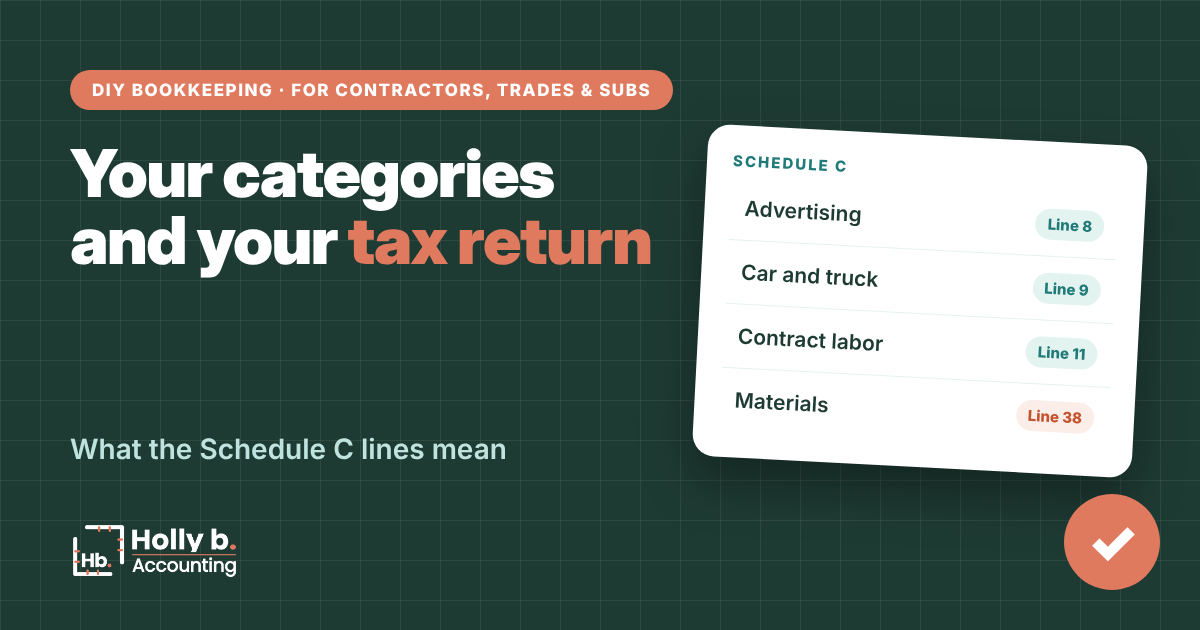
- Line 8: advertising
- Line 9: car and truck expenses (fuel, repairs)
- Line 11: contract labor (subs, unless your CPA puts them in Part III)
- Line 15: insurance
- Line 16: interest
- Line 17: legal and professional (CPA, attorney, bookkeeper)
- Line 18: office expense
- Line 20a: rent on equipment
- Line 20b: rent on a shop or yard
- Line 22: supplies (small tools)
- Line 23: taxes and licenses (permits, payroll taxes, contractor license)
- Line 25: utilities (phones too)
- Line 26: wages
- Line 27b: other expenses (bank fees, dump fees)
The calls that belong to your CPA
- Depreciation (Line 13). Trucks and big equipment get written off over time or all at once. Your CPA picks.
- Part II or Part III. Whether subs and labor go in cost of goods sold.
- Meals. Usually only partly deductible, so keep them in their own category.
- Home office. Line 30 has its own rules.
Without QuickBooks
Find your Schedule C lines
- On your Setup tab, the Tax form line column shows the suggested line for each category.
- Your Profit & Loss tab shows the same line next to every total.
- Adding a category on a spare line? Look it up in the Category List and add the line too.
- At year end, send your CPA the Profit & Loss tab. Lines included.
In QuickBooks Online
Schedule C lines in QuickBooks
- The account type and detail type tell QuickBooks (and your CPA) what kind of expense it is.
- The Category List shows the matching Schedule C line for every QuickBooks account.
- At year end, invite your CPA as your accountant (Settings, then Manage users) or send them your Profit and Loss report.
Spreadsheet vs. QuickBooks
Spreadsheet: the Schedule C line sits right next to every number, so you can see exactly where it’s headed.
QuickBooks: the lines live behind the scenes. Clean account names and types make your CPA’s mapping quick.
Common mistakes
- Picking categories to chase deductions. Pick what it actually was. Your CPA handles the rest.
- Using Other expenses for everything. A big Line 27b with no detail just means more questions.
- Calling a new truck “supplies.” Big purchases are Line 13, your CPA’s call.
- Personal spending in expenses. It’s an owner draw (see the personal vs. business spending guide).
Quick questions
Do I file Schedule C?
Usually yes if you’re a sole owner or single-member LLC. S corps and partnerships file their own returns. Your CPA can confirm.
What goes on Line 27b?
Real business expenses that don’t fit another line, like bank fees or dump fees. They get listed out on the back of the form.
Subs on Line 11 or in Part III?
Either can be right. That’s your CPA’s call, so keep subs in their own category.
Does this mean I can file my own taxes?
That’s a separate decision. Clean books make either path faster and cheaper.
Holly b. is a construction bookkeeper who’s spent many years in contractors’ books. She writes these so you can do your own, or so you’ll know who to call if you’d rather not.
Leave a Reply